
Your salary ceiling is not where you live. It’s how you’re positioned.
I learned this the slow way. I left Germany at 25 with a one-way ticket to Singapore, no job, and savings from two jobs I’d worked back home. Ten years later I’m VP Marketing at a German tech company — paid on a German scale, working from Southeast Asia. I have never once sat in the same office as my boss.
Same person. Same hours in a day. The only thing that changed was how I positioned myself for the market I wanted.
Here is the part most people get wrong: a marketing manager in Ho Chi Minh City earning $1,200 a month does the same work as someone in Berlin earning $4,500. Same output. Different employer. That gap is not about talent. It’s about which market is paying you.
This post is the full system. How to position yourself, where to look, how to apply, and how to negotiate — so you can land remote jobs from Southeast Asia that pay what your work is actually worth.
You’re not under-qualified. You’re under-positioned.
Most professionals in the region carry one quiet belief: “I’m not good enough for European companies yet.”
It feels true. It isn’t.
The remote job market does not reward the most qualified person. It rewards the person who looks like the obvious hire. Those are different things. I’ve watched skilled people get ignored while less experienced ones got the offer — because one knew how to position, and the other was waiting to be noticed.
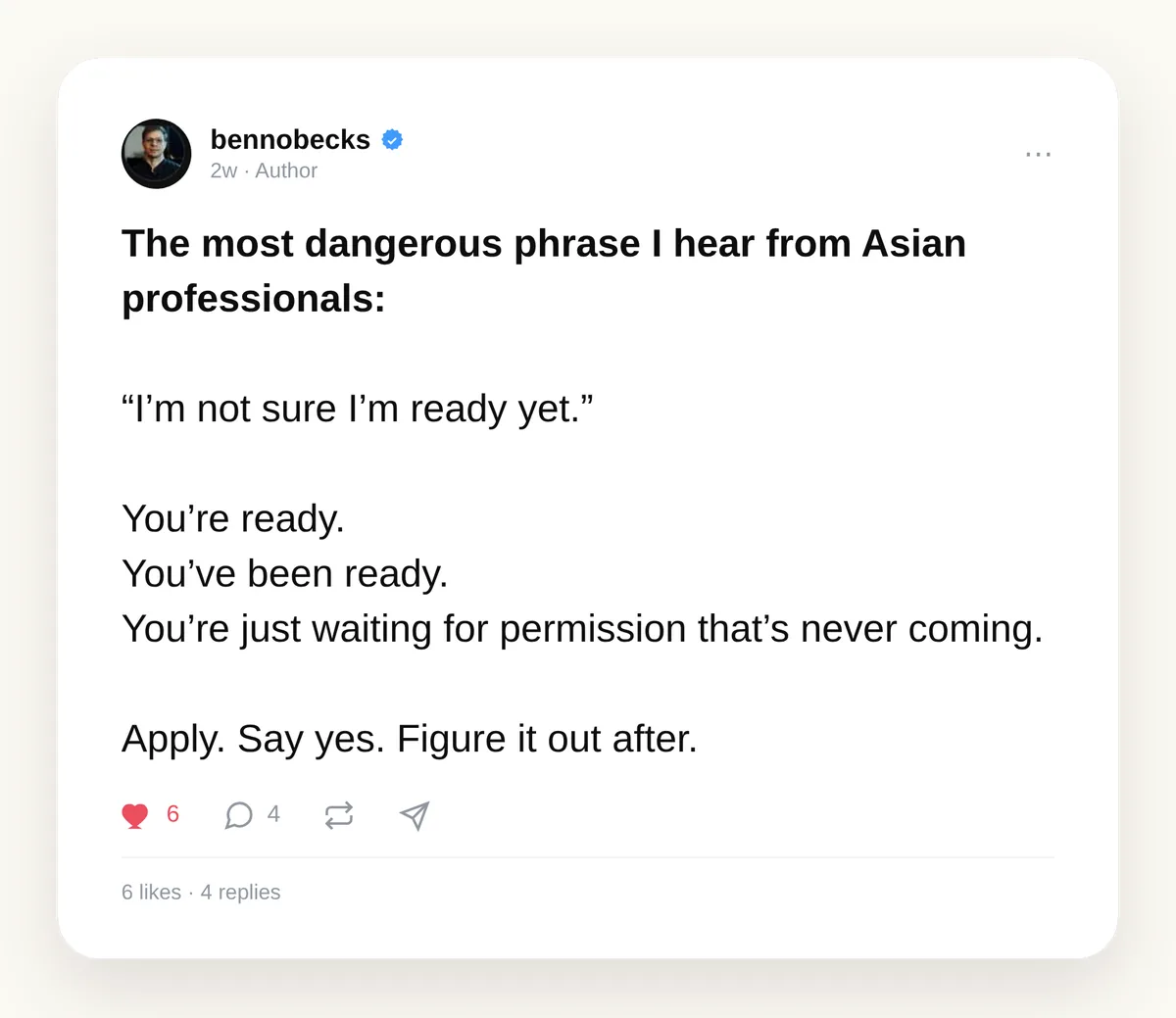
Here’s the reframe that changes everything: you don’t have a qualifications problem. You have a positioning problem. Positioning is just answering one question better than anyone else applying — “Why should we hire you, from over there, instead of someone local?”
And the answer is never “because I’m cheaper.” Cheap hires are the first ones cut. The answer is that you solve a specific problem at a global standard, from a time zone that happens to work in their favour.
Once I understood that, the game stopped being about luck. It became a system. Here it is.
Move 1 — Target companies built for remote, not just open to it
Not every “remote” job is actually open to you in Southeast Asia.
There are two kinds of employers, and only one will hire you fairly. Remote-first companies are built to run fully distributed. Their tools, meetings, and culture all assume nobody shares a room. For them, your location is genuinely irrelevant — they hire on output. Remote-friendly companies allow remote work but are still office-centric. Someone at headquarters always has the edge, and they quietly prefer candidates in their own time zone.
If you apply to remote-friendly companies, you fight an invisible disadvantage no matter how strong you are.
How to tell them apart before you waste an application: read the posting. “Remote (US only)” or “must attend quarterly meetings in [city]” — skip it. Look for signals of a distributed culture instead: async workflows, written documentation, tools like Notion, Loom, or Linear. Check the team page. If their people are spread across continents, you’re in the right place. If everyone sits in one city, you’re not.
Common mistake: treating every listing that says “remote” as equal. Ten minutes of filtering here saves you fifty dead-end applications.
Move 2 — Rewrite your CV for a global market
A recruiter decides “local hire” or “global talent” in about ten seconds. Your CV makes that call for them.
Most CVs from the region quietly signal “local” — and that instantly lowers the salary band the recruiter has in mind. The fixes are small and they matter:
- Cut the photo, date of birth, and marital status. Standard in many SEA countries, unusual in Western remote hiring.
- Use a clean, single-column format. Results first, not a list of duties.
- Reframe your experience around global scope. Not “Managed our Vietnam office” but “Built APAC operations across three markets.” Same job. Different signal.
- List the distributed-work tools you use. Slack, Notion, Zoom, Asana. Recruiters scan for these.
- Put numbers on everything. Not “responsible for social media” but “grew engagement 340% in 12 months.”
I rewrote my own CV three times over my career here. Every time I reframed it around international scope instead of local results, the quality of interest from global companies went up.
Common mistake: writing the CV for your current market instead of the one you want to be paid by.
Move 3 — Apply like a global candidate, not a local one
Your application has to answer one silent question: “Can this person deliver the same result as someone in our office?”
So lead with proof, fast. Three sentences do most of the work:
- Open with a result. “I increased qualified leads 180% in six months for a B2B SaaS company” beats any introduction about who you are or where you live.
- Name the remote factor directly. Don’t hide it. “I’ve worked across Southeast Asia for years, collaborating async with teams in European time zones.” That turns a doubt into a qualification.
- Show you fit their world. If it’s a German company, show you understand how they work. They need to know you can communicate, not just execute.
One small tactic with a real edge: apply during the employer’s business hours. Send it between 9am and 5pm in their time zone, and your application lands at the top of the inbox instead of buried under overnight submissions.
Common mistake: sending the same generic message to fifty companies. Volume loses to relevance every time when you’re up against candidates from fifty countries.
Move 4 — Negotiate to the role, not your location
This is where most people give away the most money.
When the offer comes, some companies will try to price you by your address: “We’d pay €X in Germany, but since you’re in Thailand, we’re offering €Y.” This one moment sets your pay for the next one to three years. Don’t let your rent decide it.
Anchor the conversation to the value of the role instead: “I’d like to base this on the scope of the role and the results I’ll deliver. Given the responsibilities and my track record, [amount] reflects the value I bring.”
You won’t always get full parity with someone in Frankfurt. But you’ll get far more than the first number. I’ve seen people in the region negotiate 30–50% more simply by moving the conversation from “where I live” to “what I deliver.”
And remember the leverage you already hold: your time zone is an asset. While the European office sleeps, you’ve already shipped. Use that head start instead of apologising for the distance.
Common mistake: accepting a location-based discount as if it were a law. It’s an opening offer, not a rule.
Move 5 — Build visibility so the jobs come to you
The best roles rarely come from a job board. They come from someone who already knows your work.
My biggest jump happened because of one simple post about what my team had achieved. A CEO in Singapore saw it, reached out, and offered me a role. I almost never published it — I thought, “who cares, this is just internal stuff.” I was wrong.
Visibility is not ego. It’s evidence. The most qualified person doesn’t win the remote job — the person with visible proof of competence does. So show your work, publicly and specifically. Share what you learned from a project. Write about a problem you solved. Comment with insight where global professionals gather — Threads, X, wherever your field talks.
Do this for a few months and something shifts: you stop chasing jobs, and opportunities start arriving instead.
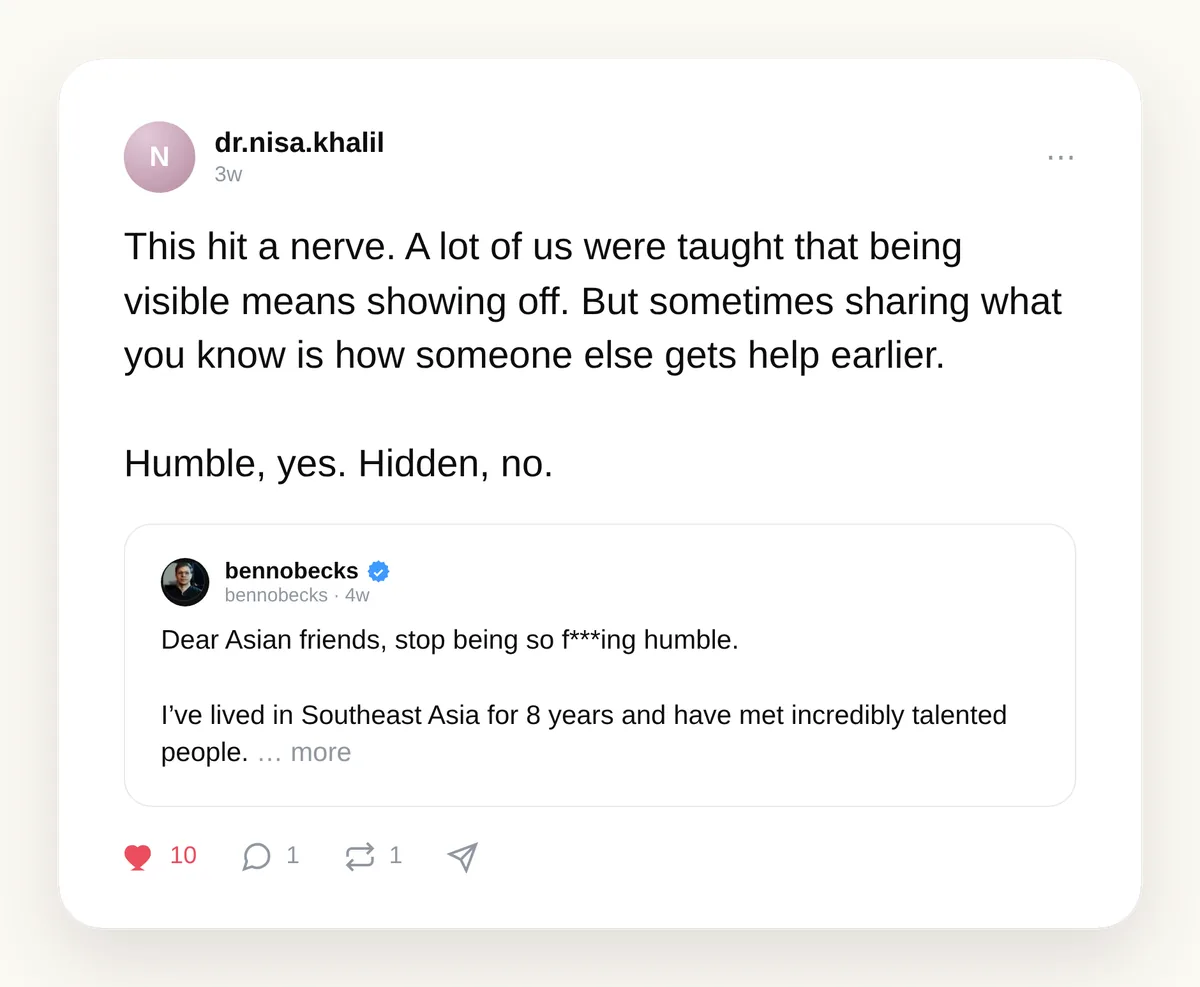
Common mistake: grinding in private and assuming good work speaks for itself. It doesn’t. You have to let it speak.
What remote jobs from Southeast Asia actually pay
Numbers make the gap real. These are the ranges I see for remote roles at European and US companies hiring from Southeast Asia — paid on the employer’s scale, not the local one.
| Role | Remote pay (monthly) | vs local |
|---|---|---|
| Junior developer | $2,000–3,500 | 1.5–3x |
| Mid-level developer | $3,500–5,500 | 3–5x |
| Senior developer | $5,500–8,000 | 5–8x |
| Junior marketing manager | $2,000–3,000 | 2–3x |
| Mid-level marketing manager | $3,000–5,000 | 2.5–4x |
| Senior marketing manager | $4,000–7,500 | 3–6x |
The pattern is simple: the more senior you are, the wider the gap. A role that tops out near $1,500 locally can pay five times that remotely — same work, different employer.
One honest note: you won’t always hit full parity with someone sitting in Berlin. You don’t need to. Even the bottom of these ranges rewrites your finances when your costs are set in Hanoi, Manila, or Da Nang.
Start this week
You don’t need to overhaul your career. You need momentum.
Today: rewrite one line of your CV from local to global scope. “Managed [local] office” becomes “Built operations across [region].”
This week: list 10 genuinely remote-first companies. Check their careers pages directly — many roles never reach the job boards.
This month: apply to 5 of them using Move 3. Lead with a result. Name the remote factor. Don’t apologise for your location.
Run it for 30 days. Track your reply rate. Then adjust the list, not your ambition.
The shift
You are not waiting for permission to be paid what you’re worth. You’re one positioning decision away from it.
The corporate world here tells you to stay in your lane — work local, accept the offer, be grateful. The whole system in this post is the opposite move. Compete globally. Apply for the role that feels slightly too big. Price yourself by the value you deliver, not the city you sleep in.
Three remote jobs, three promotions, ten years. I’m not special, and I had no plan when I started. I just stopped letting geography set my ceiling. You can make the same decision today.