I was against it.
I have a marketing background. I care about the craft — the writing, the taste, the part that takes years to get good at. When AI writing tools showed up, my honest first reaction wasn’t excitement. It was something closer to protectiveness.
And underneath that was a second feeling I’m less proud of.
Every time I opened Instagram or LinkedIn there was another post, another press release, another person who seemed to be ten steps ahead. It looked like a race that had already been run. I hadn’t started, and I’d already lost.
That was three or four years ago.
I want to be precise about what I got wrong, because it’s the same thing most people in Southeast Asia are getting wrong about AI right now — and it isn’t the thing they think.
The fear is real. It’s just aimed at the wrong thing.
Let me not soften this part, because the risk is genuine and you deserve the real number.
The IMF has flagged that roughly one-third of jobs in the Philippines are exposed to AI, with the BPO sector the most vulnerable of all. IBPAP — the Philippine industry’s own body, not a critic — recently revised its 2028 targets downward, citing AI among the causes. The most exposed work is exactly what a lot of remote work from this region currently is: voice support, data entry, basic QA, routine admin.
So if your fear is “AI is coming for the kind of work I do,” you’re not being paranoid. You’re reading the situation correctly.
But here’s what the data actually shows happening, and it’s more specific than “jobs disappear.”
PwC analysed over a billion job postings in 2026. In the most AI-exposed occupations, 52% of the new skills showing up in entry-level postings were skills that used to belong to senior people. Traditional entry-level postings fell about 10%. The redrawn ones — same job title, senior-shaped expectations — grew about 35%.
Read that again, because it’s the whole thing:
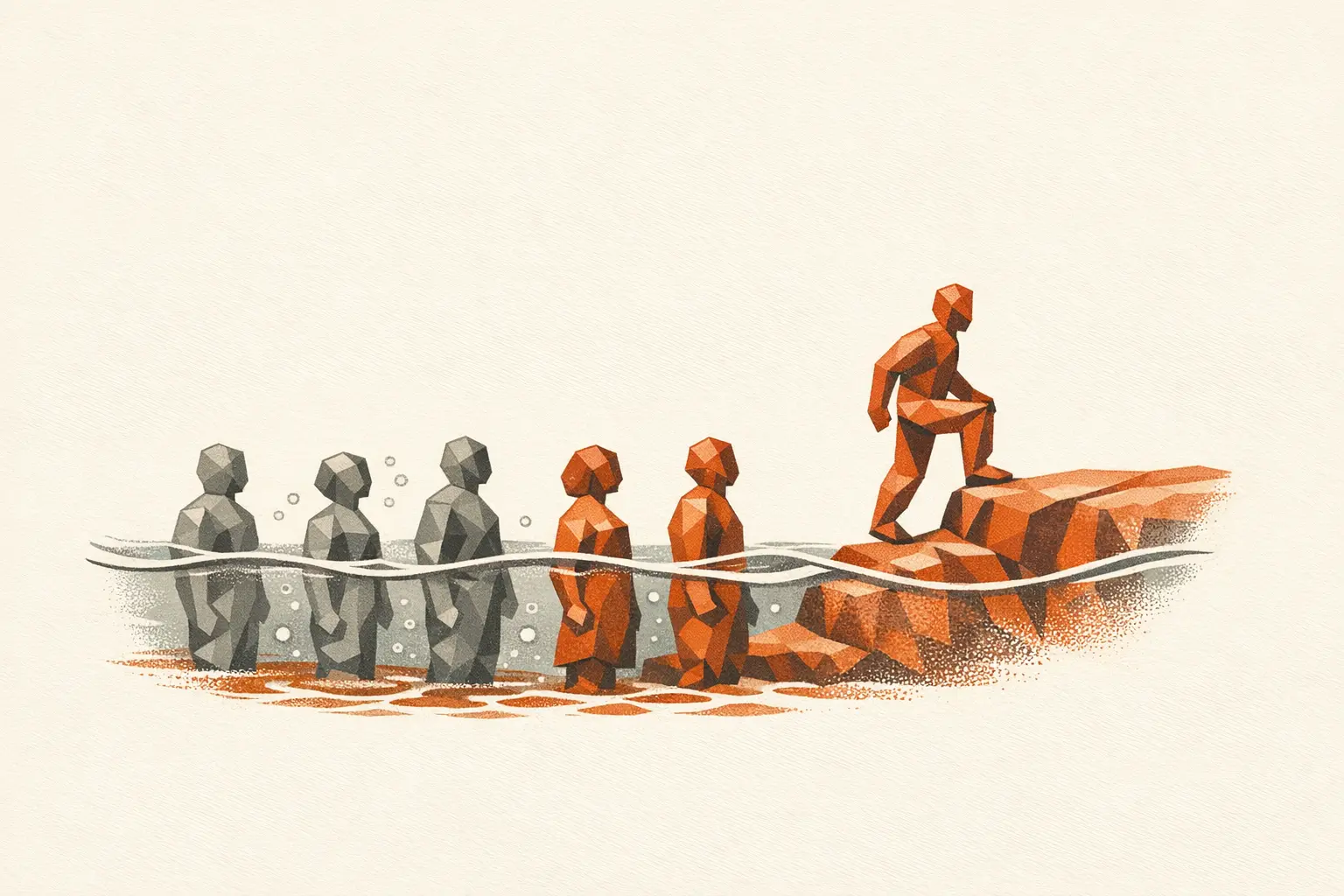
The work didn’t vanish. The floor moved.
Nobody deleted the job. They raised the bar to get in, because the parts that were easy to describe are now the parts that are easy to automate. What’s left is the part that needs a person: knowing which problem matters, deciding what “good” looks like, being accountable for the outcome.
That’s not a smaller job. It’s a bigger one.
What I actually got wrong
I said I felt like I’d already lost the race. That was three or four years ago — and it was nonsense.
Not because I was secretly ahead. Because there was no race, and the people who looked ten steps ahead on Instagram were mostly posting about being ahead rather than being ahead.
Here’s the thing nobody told me: the gap between someone who’s used AI seriously for a month and someone who’s never opened it is enormous. The gap between one month and three years is small. It’s not a race with a finish line you’ve missed. It’s a door you haven’t walked through.
I lost about a year to that feeling. That’s the real cost of the “I’m already behind” story — not the tools you didn’t learn, the year you spent not starting.
Four things that actually worked
1. Start small. Start with something you enjoy.
When I finally started, I didn’t build a system. I did small things — ideation, tweaking copy, playing with headlines. Picking up an idea and reshaping it.
And I enjoyed it. That’s not a throwaway detail; it’s the mechanism. I kept going because it was fun, and because it was fun I got good, and because I got good it became useful. In that order. Not the other way round.
That matters more than any tool recommendation I could give you:
When you have fun with AI, it’s very hard to compete with someone who’s enjoying their job.
People who force themselves to “learn AI” as a career defence do it for two weeks and stop. People who find it genuinely interesting are still going a year later, and by then they’re uncatchable — not because they’re smarter, but because they never had to make themselves do it.
The common mistake: starting with your most important work deliverable. Too much pressure, too much judgment, no room to play. Start with something nobody’s grading.
2. Use it to prepare, not to produce
The first thing that genuinely changed my working life wasn’t AI writing something for me. It was sparring.
Before an important meeting, I’d argue the thing through — here’s my position, here’s what they’ll push back on, here’s where I’m weak. ChatGPT back then, mostly Claude now. Then I’d walk in prepared in a way I simply hadn’t been before. Afterwards I’d use it to pull the notes into something the room could actually act on.
Nobody in those meetings saw AI. They saw someone who’d thought about it harder than everyone else.
That’s the entire trick, and it’s invisible from the outside. AI didn’t do my job. It made me better at the part of my job that only I could do — being sharp in a room with other humans.
The common mistake: using AI to generate the output and shipping it. That’s the most visible use and the least valuable one. The leverage is upstream, in the thinking.
3. Bring the hypothesis, not the task
This is the one that changed how I think about the whole thing, and I learned it somewhere I didn’t expect.
Last September my pec major ruptured on a bench press. I went straight to a hospital. The doctor did a quick check and told me it was a strain — nothing serious, go home.
I went home. My whole chest turned blue.
So I described exactly what had happened to an AI and asked what it could be. It came back with pec major rupture, and — this is the important part — it told me the only way to be certain was an MRI.
I went back. Different hospital. And I didn’t ask for an opinion. I said: I need an MRI scan, regardless of what the examination says.
The MRI showed a full pec major rupture. The surgeon confirmed it needed fixing — mid-30s, still training, worth repairing. I had the surgery. It’s fixed.
Now — the point of that story is not “use AI instead of a doctor.” I want to be very clear, because that would be a terrible thing to take from it. The doctor was still the one who read the scan, made the call and did the operation. AI didn’t fix my chest. A surgeon did.
The point is what changed about me in that room.
I walked in with a hypothesis and a specific request instead of a symptom and a hope. I stopped being someone waiting to be told, and became someone who arrived with the question already formed.
That’s the shift, and it transfers directly to your work. The remote worker who waits to be assigned tasks is doing the job AI is best at. The one who notices the problem, forms a view, brings it with a proposed fix — and is right often enough to be trusted — is doing the job it can’t touch.
The rule I use now: AI for the first opinion, a qualified human for the verdict. Contracts, tax, medical, legal — I’ll form a view with AI so I know what I’m looking at and what to ask, then I verify with someone who’s actually accountable. It doesn’t make me an expert. It makes me a much better client of experts.
The common mistake: treating AI output as an answer. It’s a hypothesis. Its job is to get you to the right question faster.
4. Supply the judgment. Let it supply the volume.
When my team needs new ad concepts, the first thing I do is ideate — sometimes written ideas, sometimes rough mockups.
Here’s the honest part: most of them are ugly. Out of ten, maybe eight are unusable.
But I know which two are strong. And that’s the whole job.
Then I take those two to our designer and she brings them to life — properly, with actual craft, in a way I couldn’t. She wasn’t replaced by the mockups. She was freed from the part of the process where I describe a vague idea badly and she guesses.
Notice what’s actually being divided. AI gave me volume. I supplied taste — knowing which two of ten were worth anything. My designer supplied craft. Three different things, and only one of them got automated.
That’s what “the floor moved” means in practice. Producing ten options is now free. Knowing which two are good is the job. And you can only know that if you’ve built taste — which takes exposure, reps, and caring about the work.
The common mistake: thinking the person who generates the options has the power. They don’t. The person who can tell which ones are good does.
Do this this week
Don’t build a system. Don’t buy a course. Don’t learn “prompt engineering.”
Pick one thing you already do every week. Something specific and unglamorous — the weekly report, the client update, the research you always put off.
Do it once alongside AI. Not instead of you — alongside you. Argue with it. Reject its first answer. Notice where it’s confidently wrong, because it will be, and noticing that is you building the judgment this whole post is about.
Then do the same thing next week.
That’s it. That’s the entire on-ramp. The people who are “ahead” of you did exactly this and nothing more special — they just started earlier and enjoyed it enough to keep going.
And if you want the version that compounds fastest: pick something for yourself, not for your boss. Something you’re curious about. The fun is not a bonus. It’s the engine.
The floor moved. You’re not late.
The fear that AI will take your job and the fear that you’ve already lost the race are the same fear wearing two hats. Both of them keep you exactly where you are.
I lost a year to the second one, and I was a marketing professional with a decent job and no excuse. You don’t need to lose the same year.
The work you do now, done the way you do it now, is going to get harder to sell. That’s true and I won’t pretend otherwise. But the reason isn’t that a machine can do it. It’s that the machine did the easy half, and the half that’s left — knowing what matters, deciding what’s good, owning the outcome — is the half nobody can outsource to anything.
Stop waiting to be handed tasks. Start showing up with the problem and the fix.